Crypto Ad Network for E-Commerce Stores
Learn how a crypto ad network for e-commerce stores can reach niche buyers, diversify traffic, and support performance-focused campaigns.
On this page0%
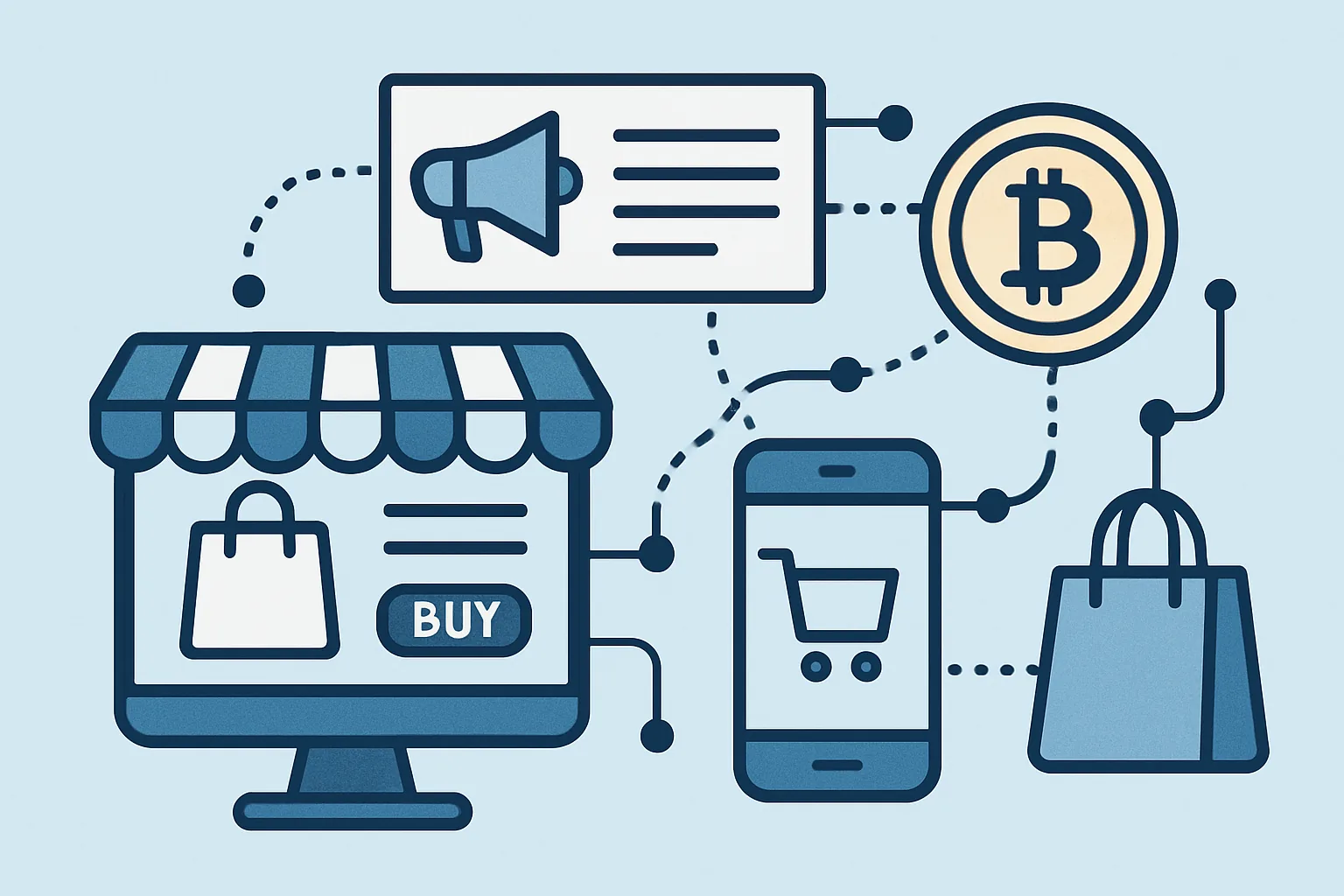
Crypto Ad Network for E-Commerce Stores
For many online stores, the phrase “crypto ad network” sounds narrower than it really is. Yes, these platforms often serve advertisers in crypto, fintech, and Web3. But that does not mean they are only useful if you sell tokens, wallets, or mining gear. An e-commerce brand can use a crypto ad network to reach audiences that are harder to catch on mainstream platforms: privacy-minded shoppers, tech-forward buyers, international traffic pools, and niche communities that already spend time inside crypto-heavy media environments.
The appeal is practical. Mainstream channels can be crowded, expensive, and heavily restricted. A crypto ad network may give an online store access to alternative inventory, different moderation rules, and campaign setups that are more flexible for certain offers. That flexibility can matter a lot when you are testing a new product category, entering a new region, or trying to diversify away from one traffic source.
If you want a broader view of the ecosystem, Adgora’s Crypto Advertising: The Complete 2026 Guide is a useful companion piece. It puts the channel in context and helps explain why crypto-adjacent media has become a serious option for performance marketers, not just a side note.
What a Crypto Ad Network Is and Why E-Commerce Stores Use It
A crypto ad network is an advertising platform that connects advertisers with publishers, websites, apps, and other digital properties that commonly accept crypto-related ads or cater to a crypto-aware audience. In simple terms, it works much like other ad networks: you create a campaign, choose targeting settings, upload creatives, set a budget, and bid for placements. The main difference is the surrounding ecosystem and often the payment stack.
Compared with mainstream platforms, crypto ad networks tend to focus less on mass-market consumer targeting and more on specialty inventory. That does not automatically make them better or worse. It just means they are often better suited to specific use cases. For e-commerce stores, those use cases can include products with a strong tech angle, accessories and gadgets, digital services, subscription offers, or higher-intent audiences that are already comfortable buying online.
There is also a privacy angle. Some merchants choose these platforms because they want alternatives that rely less on the exact same data sources used by the biggest ad ecosystems. That can be helpful when broader ad platforms tighten approvals, restrict categories, or make account stability feel like a moving target.
Still, the real reason many stores explore this channel is reach. A good crypto ad network can expose your offer to people who may not be scrolling through conventional social feeds all day. They might be reading a price tracker, a wallet review, a trading newsletter, or a niche publisher that also runs commerce-friendly ad placements. That is a different kind of attention, and sometimes a more deliberate one.
How Crypto Advertising for Online Stores Works
Crypto advertising for online stores usually begins with the same basics you would expect elsewhere: a campaign objective, a budget, a destination URL, and a creative. The available ad formats vary by network, but common options often include display banners, native ads, pop formats, push notifications, sponsored placements, and occasionally video or in-content units.
Targeting can also vary widely. Some networks let advertisers segment by geography, device type, browser, operating system, language, time of day, and publisher category. Others provide broader controls with fewer refinements. For e-commerce, that means the early setup should be guided by the offer itself. A store selling premium headphones should not target in the same way as a store pushing impulse-buy phone accessories. The audience behavior, landing page, and creative all need to line up.
Payment methods can differ from one network to another. Some accept crypto payments, some accept cards or bank transfers, and some offer both. For merchants already operating in the crypto space, the ability to pay with digital assets may be convenient. For other stores, the value is simply that the platform offers a payment method that suits international operations.
The campaign flow is usually straightforward:
- Choose the audience and publisher categories that fit your product.
- Set the campaign objective, such as traffic, clicks, conversions, or lead generation.
- Upload ad creatives that match the placement style.
- Connect tracking, ideally through a pixel or postback setup.
- Launch with a test budget and monitor click quality, bounce rate, and downstream conversions.
Where do these ads appear? Typically on publisher sites, crypto-related content hubs, utility pages, niche blogs, forums, and other traffic sources that are part of the network’s inventory. Some placements are clearly crypto-oriented; others are more general tech or finance inventory where a relevant e-commerce offer may still perform well. This is why context matters so much. A clean product can fail if the surrounding placement feels off, while a well-placed offer can outperform expectations.
Benefits and Limits of Using a Crypto Ad Network for E-Commerce Stores
The strongest benefit is access to a different audience mix. If your store serves tech-savvy buyers, early adopters, or people who already research products before they purchase, crypto-native traffic can be valuable. These users are often used to comparing offers, reading product specs, and clicking through to direct-response pages. They may also be more comfortable with digital checkout flows.
Another advantage is inventory diversity. When a store relies on a small set of ad platforms, performance can become fragile. A crypto ad network gives you another place to test creative, gather learning, and find pockets of traffic that behave differently from social or search campaigns.
However, there are trade-offs. Traffic quality can vary significantly from one network and placement to another. Some inventory may convert well; some may produce clicks that look busy in the dashboard but do not buy. That is not unique to crypto advertising, but it can be more noticeable when the platform has less scale or fewer layers of filtering.
Compliance is another serious consideration. E-commerce advertisers still need clear product claims, transparent pricing, and proper landing pages. If your store sells regulated, age-sensitive, or region-specific items, you need to verify what the network allows and what your own legal obligations are. Ad platforms do not erase product compliance. They simply change the route to the customer.
Scale can also be a limitation. Some networks are excellent for testing and niche acquisition, yet too small to become a single growth engine. That is not a flaw so much as a reality. A crypto ad network often works best as part of a broader acquisition mix rather than as the only channel.
For publishers and advertisers who want a deeper look at the supply side of this ecosystem, Adgora’s Crypto Ad Network for Publishers: Monetize Sites explains how the network layer connects inventory and demand.
How to Buy Traffic for E-Commerce Through Crypto Ad Platforms
To buy traffic for e-commerce through crypto ad platforms, start with a clear objective. Are you trying to generate first purchases, email signups, product-page visits, or remarketing audiences? The answer changes everything. A traffic campaign can be useful for discovery, but if your store is already conversion-ready, you may want a setup tied directly to purchases or at least to add-to-cart behavior.
Bidding models differ by network. Some platforms run on CPM-based buying, others on CPC, and some on hybrid or auction structures. The best model depends on how much control you want and how the network measures value. If you are evaluating traffic for conversion potential, do not focus only on cheap clicks. Cheap clicks can be expensive if they never progress past the landing page.
Landing-page alignment is critical. The page a visitor sees after clicking should mirror the promise in the ad. If the creative sells “free shipping on wireless earbuds,” the landing page should not bury shipping details three screens down. If the ad highlights a seasonal bundle, that bundle needs to be obvious on the page. The tighter the match, the less friction in the funnel.
A sensible evaluation process usually includes:
- Launching one offer per campaign so performance is readable.
- Keeping one main landing page for the first test.
- Separating geographies or device types when results are inconsistent.
- Checking view-through behavior, time on page, add-to-cart rate, and purchase rate.
- Pausing placements that generate clicks without meaningful downstream action.
This is the point where many merchants discover that traffic quality is not a slogan; it is a pattern. A crypto ad network can deliver promising visitors, but only if the store has the discipline to measure beyond raw clicks. If you want a more tactical look at buying traffic in a competitive direct-response environment, the Dropshipping Paid Traffic: A Buyer's Playbook offers a useful performance mindset even beyond dropshipping itself.
Choosing the Right Crypto Ad Network for an Online Store
Not all networks are built for the same merchant. Before you choose one, compare the factors that actually affect store performance.
| Criterion | Why it matters |
|---|---|
| Audience fit | Do the publishers and users match your product category and buying intent? |
| Geo coverage | Can the network serve the countries and regions you want to reach? |
| Ad formats | Does the platform support the placements your creative can actually use? |
| Moderation rules | Can your product be approved without constant rewrites or rejected claims? |
| Support quality | Will someone help when tracking breaks or a campaign underperforms? |
| Tracking integrations | Can you connect pixels, postbacks, or analytics cleanly? |
| Payment flexibility | Can you fund campaigns in a way that fits your business workflow? |
There is also a softer criterion that often gets overlooked: how readable the platform feels. If the dashboard makes it difficult to isolate placements, adjust bids, or understand where money is going, you will spend too much time guessing. Good interface design does not guarantee performance, but bad reporting can hide problems until the budget is gone.
When possible, start small and compare networks side by side. The “best” platform is not the one with the loudest promise. It is the one that gives your store usable traffic, sensible controls, and enough transparency to make decisions without superstition.
Best Practices for E-Commerce Campaigns
Strong creatives still matter. In crypto advertising for online stores, visual clarity usually beats cleverness. Show the product early. Keep the offer readable. Make the CTA obvious. If you are selling a physical item, include the thing people actually want to inspect: the color, the size, the use case, the benefit. Abstract branding can be useful later, once the funnel has already proven itself.
Offer structure matters just as much. A good e-commerce ad should not force the customer to solve a puzzle. If you have a discount, state it clearly. If there is a bundle, explain what is inside. If the product is premium, justify the premium with evidence that belongs on the page, not just in the headline.
Tracking should be set up before scale, not after. At minimum, confirm that click-to-session data makes sense and that conversion events are firing properly. If the network supports it, use conversion tracking that can distinguish view content, add to cart, checkout initiated, and completed purchase. Without that, you are making decisions with one eye closed.
Retargeting can help, especially when the first click comes from a less familiar audience pool. A visitor who clicks from a crypto-friendly publisher may not buy immediately, but a second touchpoint can bring them back if the offer and page experience are solid. Even simple remarketing to cart abandoners can improve the economics of a campaign.
Finally, watch the funnel end to end. A campaign can look healthy at the click stage and still fail because checkout is slow, shipping is unclear, or the mobile experience is clumsy. Sometimes the ad is fine and the store is the problem. That is not a pleasant discovery, but it is a useful one.
Common Mistakes to Avoid
The first mistake is sending traffic to a weak product page. If your landing page is thin, confusing, or visually dated, even decent traffic will struggle. E-commerce users are quick to judge whether a page looks trustworthy. They do not need a brand manifesto. They need a reason to continue.
The second mistake is ignoring device and geo mismatch. A campaign may look promising on desktop but fail on mobile if the checkout experience is too slow or the page layout breaks. Likewise, a product that performs in one market may not resonate in another due to shipping costs, language, or buying habits. If you are testing across regions, treat each region as its own market.
The third mistake is using an unclear offer. “High-quality essentials” sounds nice, but it does not explain what the shopper gets. The best-performing e-commerce campaigns are usually more specific than marketers expect. Specificity reduces hesitation.
The fourth mistake is skipping conversion tracking. If you cannot tell which placements, creatives, or audiences are producing purchases, you are essentially paying for guesses. That can be tolerated in a toy budget phase, but it is a poor habit once spend grows.
One more: chasing volume too early. A small test that generates a few real orders is more valuable than a larger campaign full of unqualified clicks. Patience pays, especially in a channel where audience fit and placement quality can vary a lot from one source to the next.
Final Takeaway: When a Crypto Ad Network Makes Sense for E-Commerce
A crypto ad network makes sense for e-commerce when you need alternative reach, want access to crypto-native or tech-forward audiences, or are looking for another performance channel beyond the usual mainstream options. It can be especially useful for testing, for niche products, and for merchants who want more flexibility in buying traffic.
It is less compelling when you need massive scale immediately, when your product and landing page are still underdeveloped, or when you have not yet solved the basics of tracking and conversion. In those cases, mainstream channels may be the better first step simply because they offer more mature tooling and broader demand.
The simplest way to think about it is this: a crypto ad network is not a shortcut. It is a different route. If your offer is clear, your page is persuasive, and your tracking is honest, that route can be surprisingly useful. If those pieces are missing, no network will save the campaign for long.
For stores willing to test thoughtfully, the channel deserves a place on the shortlist. And if you are still mapping out how crypto inventory, publisher monetization, and ad-tech fit together, the Adgora Blog has more context across the ecosystem, starting with the Adgora Blog — Crypto Advertising, Monetization & Ad-Tech Guides.
Terms in this article
Short definitions from the Adgora glossary.
- Offer
- A specific thing being advertised with a defined payout for a defined action — the unit of CPA. See the CPA marketing guide.
- Creative
- The actual ad shown — the image, headline, text or video file plus its landing URL. Reviewed before it can serve.
- Conversion
- The action you are actually paying for — a sale, signup, deposit or install. Conversions are idempotent on Adgora: the same click ID and offer will…
- Landing page
- The page a click sends someone to. It has one job: continue the promise the ad made. See landing page optimization.
- Moderation
- The review a site or creative passes before it can serve. Keeps junk supply out of the marketplace — which is what keeps bids healthy for everyone…
- Bid
- The maximum you are willing to pay for a click or a thousand impressions. Distinct from budget: the bid sets your price per unit, the budget sets h…
- CPC
- Cost per click — you pay only when someone clicks. The bid you set is the most you will pay for a click; the auction often clears lower. Best when…
- Native ad
- A paid unit styled to match the surrounding content — headline, thumbnail and text that read rather than shout. Specs and pricing →
Frequently asked questions
What is a crypto ad network for e-commerce stores?
A crypto ad network is an advertising platform that connects advertisers with publishers, websites, apps, and other digital properties that often accept crypto-related ads or serve a crypto-aware audience. For e-commerce stores, it functions like a regular ad network but within a more specialized ecosystem and often with different payment and targeting options.
Why would an online store use a crypto ad network instead of mainstream ad platforms?
Online stores use crypto ad networks to reach audiences that can be harder to find on mainstream platforms, such as privacy-minded shoppers, tech-forward buyers, and niche communities. These networks can also offer more flexible inventory, different moderation rules, and an additional traffic source for testing and diversification.
How do crypto ads for online stores usually work?
The process typically starts with choosing a campaign objective, budget, destination URL, and creative, then setting targeting and launching the ads. Common steps include connecting tracking, starting with a test budget, and monitoring click quality and conversions.
What kinds of products or offers can perform well on a crypto ad network?
Crypto ad networks can work well for products with a strong tech angle, accessories and gadgets, digital services, subscription offers, and other products aimed at higher-intent online buyers. They are especially useful for stores targeting people who research products carefully before purchasing.
What are the main benefits of using a crypto ad network for e-commerce?
The biggest benefits are access to a different audience mix and more inventory diversity. This can help stores test creatives, reduce dependence on a single ad platform, and find traffic that may respond better to their offers.
