Adgora display ads vs popunder ads
Learn Adgora display ads vs popunder ads: visibility, user experience, traffic quality, and when each format fits publishers and advertisers.
On this page0%
What “display ads vs popunder ads” means on Adgora
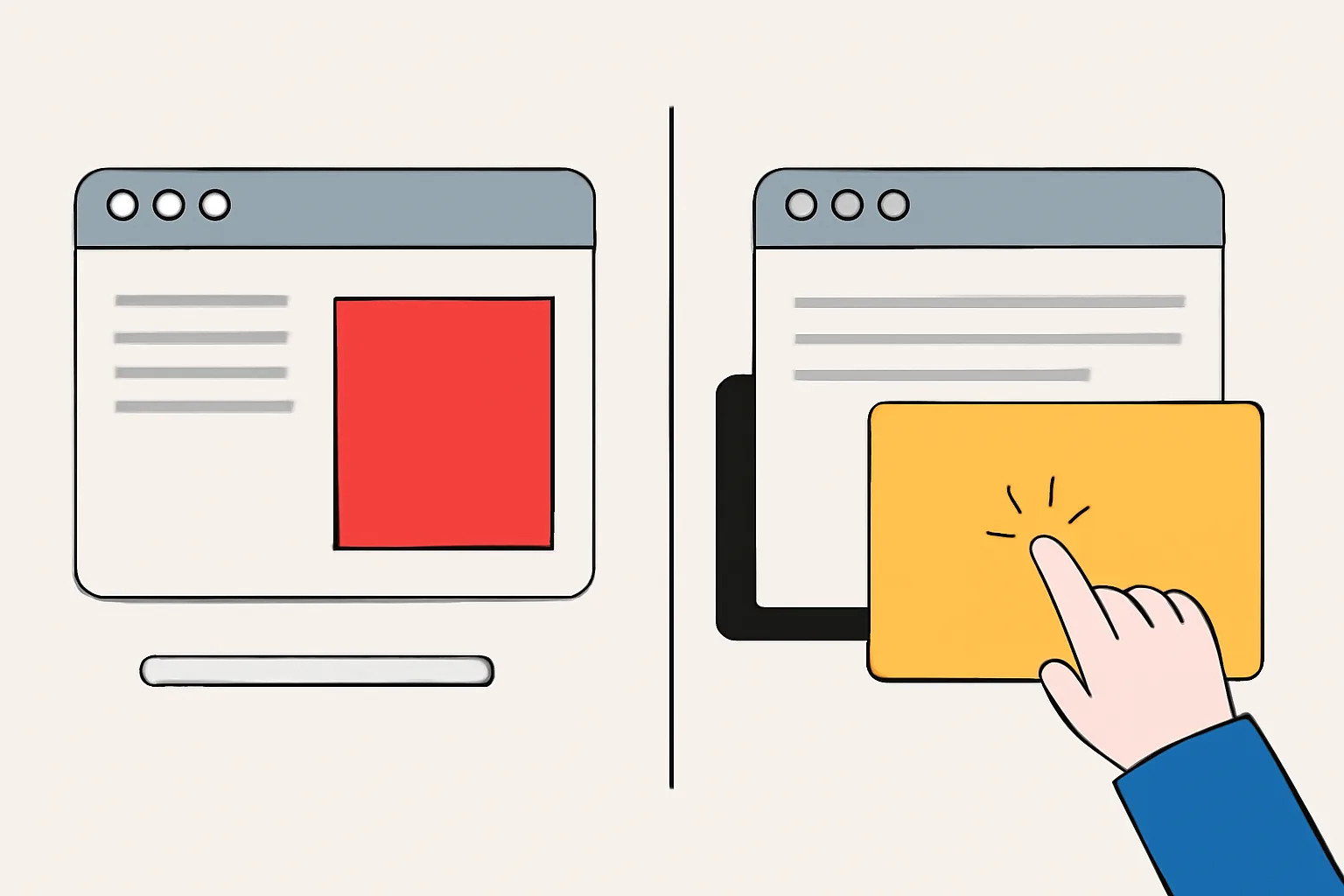
On Adgora, display ads are the familiar visual units you place in-page: banners, rectangles, native-looking blocks, and similar placements that live inside the content flow. Popunder ads are different by design. They open behind the active browser window, so the user sees them after the current tab is closed or moved away. One sits in view. The other waits.
That basic difference shapes the whole comparison, including how people react, how publishers earn, and what advertisers can expect from a campaign. If you are weighing Adgora display ads vs popunder ads, you are not choosing between two names for the same thing. You are choosing between two traffic experiences that behave differently on the page and in the user’s mind.
There is also a practical angle. A display ad usually asks for attention while the user is already doing something else on the page. A popunder ad asks for attention after the page interaction ends. Those 2 moments create different outcomes for click volume, perceived interruption, and downstream conversion. Small difference. Big effect.
Comparison criteria for choosing an ad format
Before picking a format, compare 6 things: visibility, user experience, targeting, traffic quality, conversion intent, and monetization fit. Those are the numbers that matter in day-to-day decisions, even if the dashboard shows a dozen other metrics.
Visibility is not just “can it be seen.” A display unit may be visible for 3 seconds in a scroll-heavy article and still be ignored. A popunder may get noticed later, but that notice can arrive with annoyance attached. User experience sits right beside visibility, and on some sites that single choice determines whether people stay for 1 page or return for 10.
Targeting matters because the same format can perform differently on crypto readers, gaming users, or mobile visitors. If you want a broader framework for traffic and placement language, the ad tech glossary is a useful reference point before you set your first campaign rules.
Traffic quality and conversion intent are not the same thing. A format can send many clicks and still produce weak leads, or fewer clicks and better post-click behavior. That is why the question is never only “which format gets more volume?” It is “which format gets the right kind of volume for this site, offer, and audience?”
Adgora display ads: strengths, limits, and best use cases
Display ads work best when the page already has attention. A reader scanning a tutorial, a comparison page, or a blog post can notice a banner in a sidebar or a unit between sections without losing the thread completely. That makes display ads a natural fit for content-rich sites, especially where the audience expects advertising and does not mind it being present.
For publishers, display ads are often easiest to explain to teams and advertisers. The ad is visible on the page, the placement can be repeated across templates, and the inventory is easier to map to sections such as article body, header, or footer. For advertisers, that means a cleaner sense of context. A display ad beside a page about wallets, exchanges, or gaming can feel more intentional than a sudden interruption.
Display ads also suit campaigns that care about brand presence. A logo, product shot, or short message can reinforce recognition across multiple impressions, even when the user does not click on the first view. This matters on sites with steady repeat traffic, because repetition can lift recall over time. Not every campaign needs a direct response on the first visit.
The limits are real, though. Display ads can suffer from banner blindness, especially on pages where readers are trained to ignore the edges. A small unit buried in a crowded layout may earn low engagement, and a large unit may create friction if it pushes content too far down the page. On some sites, that trade-off hurts retention more than it helps revenue.
Display ads also depend on layout discipline. If a page already has 4 widgets, 2 pop-ups, and a cookie prompt, another visual unit can make the experience feel noisy. That is why publishers who run display ads need to think in sections, not just placements. One ad in the right place can do more than 3 ad slots stacked together.
For advertisers focused on specific niches, display ads can pair well with other vertical content. If your campaign sits in a category like dating offers or similar intent-driven topics, a clean display placement near relevant articles may produce steadier engagement than a more disruptive format. The context matters more than the decoration.
Display ads are usually the safer starting point for sites that depend on user trust. A tutorial site, a finance blog, or a publisher building repeat readership can test display ads first, then measure whether the revenue justifies the space. Plainly put: if the site would look worse with the ad, stop there.
Adgora popunder ads: strengths, limits, and best use cases
Popunder ads take a different path. They appear behind the active window, so the visitor keeps reading or browsing before seeing the ad later. That delayed reveal changes the psychology. The ad may avoid immediate interruption, but it also enters the user’s session with a stronger sense of surprise.
For some advertisers, that surprise is the point. Popunder ads can deliver fast exposure and can work well where the offer needs quick attention rather than long reading time. Affiliate pages, registration flows, and high-volume traffic can all be a match if the user base is tolerant of a more aggressive format.
Publishers often choose popunder ads when the site can absorb a stronger monetization push without breaking the core experience. This happens more often on entertainment traffic, streaming-style environments, or pages where the audience is there for fast consumption rather than deep reading. A site with 20-second visits has different expectations from a site with 5-minute articles.
The upside is directness. Popunder ads can create a strong monetization boost on traffic that is otherwise hard to price well with standard display inventory. The downside is just as direct: some users dislike them, ad blockers may respond aggressively, and repeated exposure can damage trust if the site is not careful with frequency.
There is also a timing issue. A popunder can convert well on impulsive offers, but it can look poor on a page where the user came for one exact answer and nothing else. A technical guide, a legal article, or a highly focused product page may not welcome that kind of interruption. One bad match can lower satisfaction faster than a modest ad rate can repair it.
That said, popunder ads still have a place. They can be effective for traffic that is broad, casual, or already accustomed to monetized environments. They are also worth testing when the publisher wants to monetize without shrinking the main article layout. The page stays clean. The revenue attempt happens off the main surface.
Side-by-side comparison table: display ads vs popunder ads
| Criterion | Display ads | Popunder ads |
|---|---|---|
| Visibility | Visible on-page, depends on placement and scroll depth | Appears after the active window changes; attention arrives later |
| User experience | Usually lighter if placed well | More intrusive; may feel disruptive to some users |
| Targeting fit | Strong for contextual pages and repeat visits | Better for broad traffic and fast-response offers |
| Traffic quality | Often steadier for engaged readers | Can vary widely by source and audience tolerance |
| Conversion intent | Works well for awareness and lower-friction clicks | Can work well for impulse-driven or direct-response goals |
| Monetization fit | Good for preserving layout and brand feel | Good for maximizing revenue on tolerant traffic |
| Best site types | Blogs, guides, editorial sites, niche content hubs | Entertainment, casual traffic, high-volume publisher inventory |
The table is simple on purpose. If you need a formula, use this one: display ads reward context, while popunder ads reward tolerance. That is the short version, and it survives most real-world tests.
Which format is better for your campaign or site?
The answer depends on 4 variables: your goal, your audience, your content type, and your tolerance for disruption. If your site earns trust from long reads, then display ads usually fit better. If your traffic arrives fast and leaves fast, popunder ads may produce stronger short-term revenue.
For a content site with 1 main article and several supporting posts, display ads often protect the reading flow while still generating impressions. For a site with high bounce traffic, popunder ads can turn a brief visit into monetization without crowding the page. Different traffic, different outcome.
Advertisers should also think about the offer itself. A brand campaign or a soft-funnel product page often performs better with display ads, because the format feels less aggressive. A direct-response offer, a short registration flow, or a fast landing page may do better with popunder ads, especially if the audience already knows the category. If you run crypto advertising, for example, the fit between audience tolerance and format can be the difference between a workable campaign and a wasteful one.
Publishers should ask a blunt question: what happens if I add this format to my best page? If the answer is “the page still feels normal,” display ads are likely the safer test. If the answer is “the page becomes harder to use,” popunder ads may belong only on select traffic segments, not the whole site. A single page can carry the revenue burden; it should not carry the damage too.
There is also a planning angle. Sites focused on recurring readers can often build around display ads and keep user trust intact. Sites that monetize broad traffic, including mobile-heavy or entertainment-driven audiences, may get more value from popunder ads if they monitor complaints and session drop-off closely. For broader strategies, the crypto advertising, monetization & Ad-Tech guides section can help frame the next test.
If your business model depends on comparisons, traffic efficiency, or affiliate economics, you may also want to compare the format choice with other traffic models such as CPC vs CPM vs CPA. The format does not live alone. It works inside a wider buying and selling decision.
Honest verdict: when to choose display ads, when to choose popunder ads
Choose display ads when you want the page to keep its shape, the audience to keep reading, and the ad to feel part of the site instead of a break from it. That is the better pick for editorial sites, niche blogs, and publishers who care about repeat visits more than a quick spike in revenue.
Choose popunder ads when the traffic is broad, the site can tolerate a stronger monetization move, and the offer needs immediate attention rather than gentle context. They can work, but they are not subtle. Users notice. Some will mind, and that has to be accepted before the first test goes live.
The best operators test both formats on different pages, not with blind optimism but with 2 clean setups and clear limits on frequency, placement, and audience segment. One format may win on revenue. The other may win on retention. That split is normal, not a failure.
If you are still choosing, start with the path that matches your site’s promise. A site built around reading should not behave like a slot machine. A site built for quick traffic should not pretend every visitor wants a long editorial experience. Pick the format that fits the page, then measure what the page gives back.
Terms in this article
Short definitions from the Adgora glossary.
- Display ad
- A standard image banner in a fixed slot. Adgora serves six IAB sizes. Specs and pricing →
- Popunder
- A full page opened in a tab behind the user's window. No creative — the landing page is the ad. The cheapest volume available and the coldest audie…
- Offer
- A specific thing being advertised with a defined payout for a defined action — the unit of CPA. See the CPA marketing guide.
- Conversion
- The action you are actually paying for — a sale, signup, deposit or install. Conversions are idempotent on Adgora: the same click ID and offer will…
- Banner blindness
- The learned habit of ignoring anything shaped like an ad. The reason native, teaser and interstitial formats exist.
- Impression
- One ad served to one user, once.
- CPC
- Cost per click — you pay only when someone clicks. The bid you set is the most you will pay for a click; the auction often clears lower. Best when…
- CPM
- Cost per mille — the price for one thousand impressions, paid whether or not anyone clicks. You are buying attention rather than actions, which sui…
Frequently asked questions
What is the difference between display ads and popunder ads on Adgora?
Display ads are visible in-page units like banners, rectangles, or native-looking blocks that sit inside the content flow. Popunder ads open behind the active browser window and are seen only after the user closes or moves away from the current tab.
When are display ads a good fit on Adgora?
Display ads work best on content-rich sites where users are already paying attention to the page, such as tutorials, comparison pages, or blog posts. They are also a strong choice for campaigns focused on brand presence and repeat exposure.
What are the main limitations of display ads?
Display ads can suffer from banner blindness, especially on pages where readers ignore the edges of the layout. They can also hurt the user experience if the page becomes too crowded or if the ad pushes content too far down.
Why would an advertiser choose popunder ads instead of display ads?
Popunder ads can deliver fast exposure and may work well when an offer needs immediate attention rather than long reading time. They can be effective on high-volume traffic or with audiences that tolerate a more aggressive format.
What criteria should be compared before choosing an ad format on Adgora?
The article recommends comparing visibility, user experience, targeting, traffic quality, conversion intent, and monetization fit. These factors help determine whether display ads or popunder ads are better for a specific site, offer, and audience.
